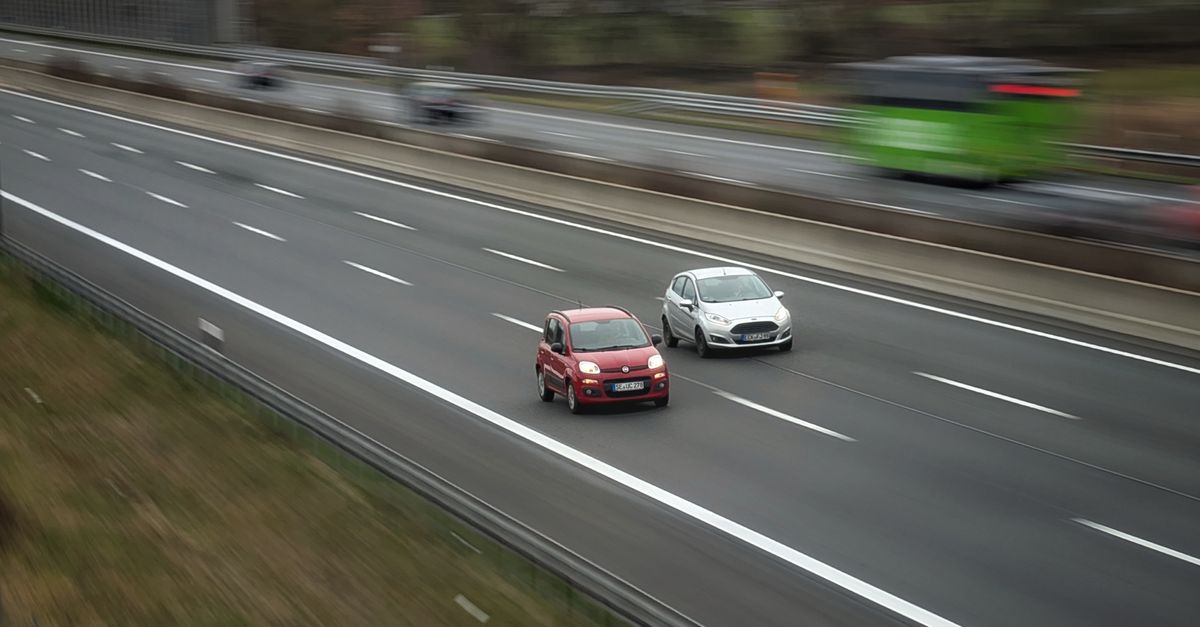
Passing a slower vehicle does not end the moment your rear bumper clears it. Returning to the left too soon can attract police attention and may be treated as careless or inconsiderate driving, with a fine and penalty points possible.
Where drivers misjudge it
The Highway Code expects drivers to return to the left when it is safe after overtaking. It also warns against cutting in on the vehicle just passed, even where the overtaking driver has signalled and believes the manoeuvre is complete.
The common error is moving across as soon as there appears to be enough physical space. If the other driver must brake, alter course or accept a sharply reduced following distance, the lane change may fall below the standard expected of a careful driver. A manoeuvre that feels efficient from the overtaking car can look abrupt from behind.
Why signalling is insufficient
An indicator communicates an intention; it does not give priority or require another driver to create a gap. Signalling before checking that the space is available will not make an unsafe lane change acceptable, and beginning to move while indicating can leave the other driver with little time to react.
There is no single camera-measured distance that automatically determines whether an offence has occurred. Police may consider the complete sequence, including relative speed, traffic conditions, the available gap and any reaction from surrounding vehicles. Officer observations, dashcam recordings and other available footage may provide evidence of how the manoeuvre unfolded.
Creating a safe return
Treat the move back to the left as a separate lane change rather than the automatic final stage of overtaking. A useful guide is to wait until the overtaken vehicle is clearly visible in the interior mirror, while allowing for differences in mirrors, vehicle lengths and speeds. The aim is a gap that remains safe without forcing anyone else to respond.
- Check the interior and left mirror before signalling.
- Make sure the gap is opening rather than closing.
- Check the blind spot before moving across.
- Change lanes smoothly and avoid forcing another driver to brake.
- Wait longer when spray, glare or congestion reduces visibility.
On the next motorway journey, resist the urge to pull left immediately after passing. An extra mirror check and a little more space can keep normal lane discipline from becoming evidence of careless driving.