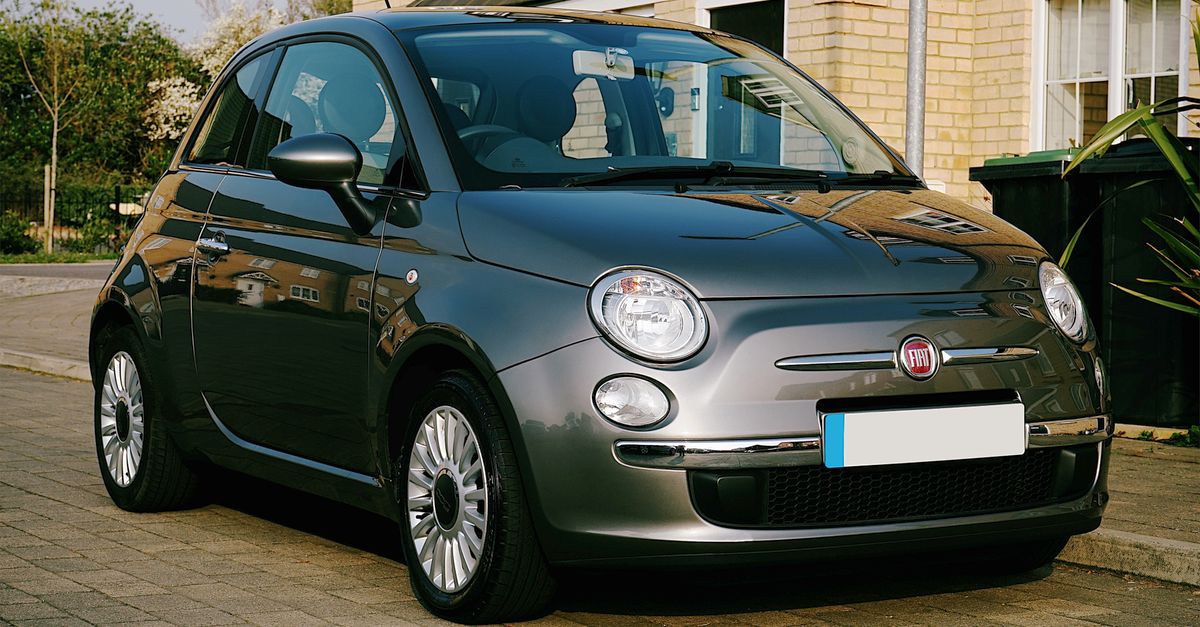
You pull up on a narrow street, see half a dozen cars with two wheels on the pavement, and assume it must be acceptable. That is still a risky bet in many parts of Great Britain, because pavement parking can trigger a penalty even where drivers see it as normal local practice.
In simple terms, pavement parking means leaving part or all of the vehicle on the footway rather than fully on the carriageway. It is often done to leave more room for moving traffic, but it can block pedestrians, wheelchairs, pushchairs and people with limited sight from using the pavement safely.
Why drivers still get fined
The biggest mistake is treating pavement parking as harmless if other cars can still pass. Enforcement is usually less about whether traffic flows and more about whether the vehicle obstructs the footway, a dropped kerb, a crossing point, or visibility at a junction.
That matters because penalties do not always come from one single rule. Depending on where you are, action can come from local parking restrictions, wider footway-parking rules in force in some areas, or general obstruction offences. If the vehicle is causing a clear hazard, the cost can quickly rise beyond a basic parking ticket.
In practice, drivers are most exposed near schools, shops, medical sites, busier residential streets and anywhere pedestrians are likely to be forced into the road. Repeated complaints from residents also tend to increase enforcement.
Where the risk remains
There is no safe national assumption that “two wheels up” is fine. Some places have broader restrictions on pavement parking, while elsewhere the rules are more dependent on signs, traffic orders and whether the vehicle is causing obstruction. That local variation is exactly why copying the car in front is a poor guide.
Even where pavement parking is not broadly banned, several situations regularly attract penalties. Blocking a dropped kerb is a common one, especially where it serves wheelchair users, prams, driveways or crossings. Parking partly on the pavement near corners, refuges or narrow footways is another, because sightlines and pedestrian access are reduced at the same time.
There is also a maintenance angle that drivers often ignore. Mounting kerbs can scuff sidewalls, upset wheel alignment and damage suspension over time, especially with heavier cars and repeated low-speed impacts.
Myth and reality
Myth: if there is still enough room for a person to squeeze past, the car is not obstructing anyone. Reality: a gap that works for one able-bodied adult may still be unusable for a wheelchair, mobility scooter, guide dog user or double buggy.
A common mistake is judging clearance from the driver’s seat and moving on. The safer test is simpler: if you are not certain the full pavement remains comfortably usable, do not leave the car there.
Checklist
- Before locking up, look back at the whole pavement, not just the road space left for cars.
- Avoid dropped kerbs, crossing points, corners and narrow sections of footway.
- Do not assume existing tyre marks or parked cars mean it is permitted.
- If signs, bay markings or local restrictions are unclear, choose a fully legal carriageway space or a marked bay.
- If you need to stop briefly for loading or pick-up, remember that “only a minute” may still be enough for enforcement if access is blocked.
What to do today is straightforward: treat pavement parking as a last resort, not a normal habit, and verify local restrictions when a street layout looks doubtful. A short walk from a legal space is usually cheaper than a ticket, a tow, or damage to tyres and wheels.