Your car can feel normal while the tires are quietly costing you money. Even a small drop below the recommended pressure can raise fuel use, wear out the tread faster, and make the tire run hotter than it should.
Underinflation simply means the tire has less air than the vehicle maker recommends on the driver’s door placard. That changes how the tire sits on the road: the shoulders scrub harder, the sidewall flexes more, and the engine has to work a little harder every mile.
Where the money goes
The first loss is usually at the pump. Low pressure increases rolling resistance, so the car needs more energy to keep moving, especially on highway trips, in hot weather, or with passengers and luggage on board.
The bigger expense is often hidden in the tread. A tire that spends weeks underinflated tends to wear its outer edges sooner, which can cut useful life by thousands of miles and bring forward a full set of replacements long before most drivers expect it.
What you can spot fast
The good news is that the most useful checks take about five minutes on a cold tire. If you do a lot of commuting or short trips, this is one of the simplest maintenance habits that pays back quickly.
- Use a basic tire gauge and compare each tire with the pressure on the driver’s door placard, not the maximum printed on the tire sidewall.
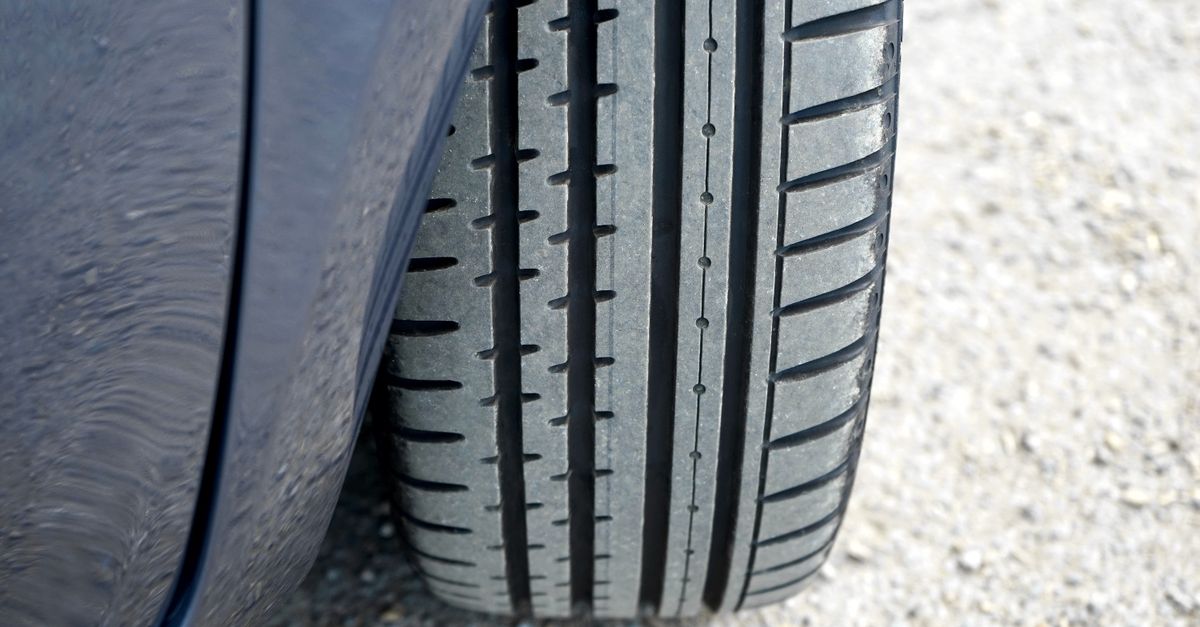
- Look across the tread. If both shoulders look smoother than the center, the tire may have been running low for a while.
- Notice whether one tire keeps dropping faster than the others. That often points to a nail, a valve problem, or a slow leak at the rim.
- If the TPMS light appears, that is the tire pressure monitoring system warning you that one or more tires may be low. Airing up may clear it, but if it returns, there is usually a reason.
When air stops being enough
Some pressure loss is normal as temperatures change, but repeated top-ups are not. If one tire needs air more than once in a month, or the car starts feeling vague in corners, harsher over bumps, or less stable in heavy rain, it is time for a closer look.
A shop pressure check is often free or low-cost, and a simple puncture repair usually takes around 20 to 40 minutes and costs far less than replacing a tire. But if you see a bulge, sidewall cracking, exposed cords, or heavy inner-edge wear, DIY should stop there: low-pressure heat damage can weaken a tire in ways that are not always obvious from the outside.
Checking pressures monthly, and before longer highway runs, is one of the cheapest ways to protect tire life and fuel economy. A few minutes with a gauge can prevent a small air loss from turning into an early tire bill or a roadside problem.