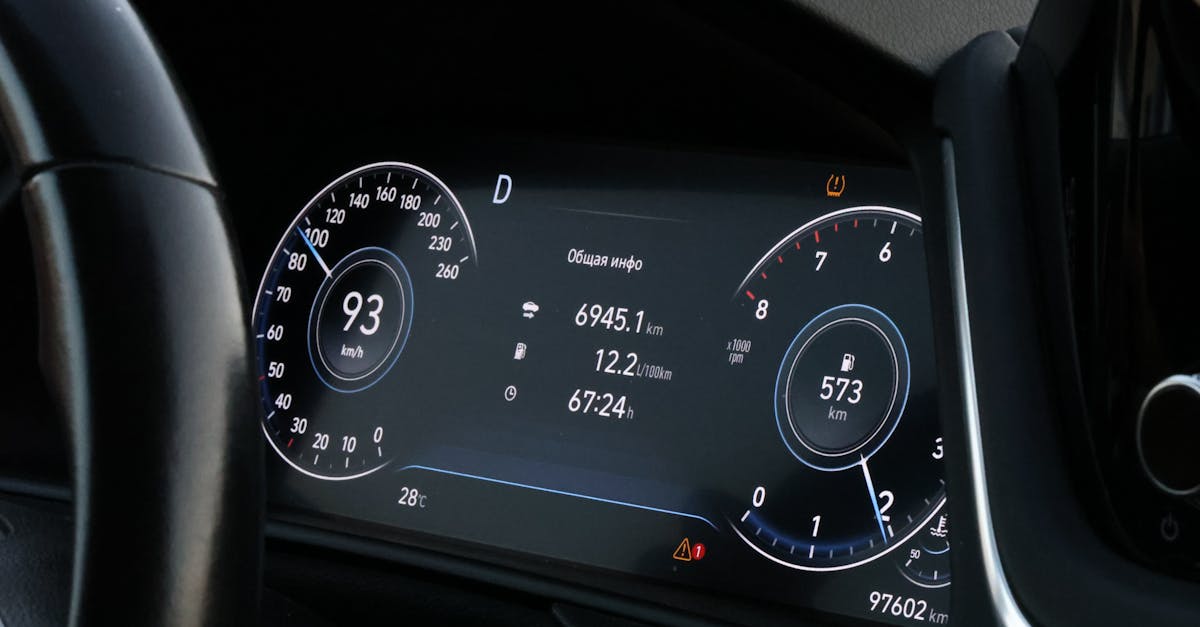
You’ve packed the car, set the sat-nav and cranked the air con – then watch the fuel gauge drop faster than expected. Summer trips in Australia often mean long distances, high speeds and heavy loads, which are exactly the conditions that punish fuel economy. In simple terms, real-time driving data is the live information your car provides about speed, fuel use and driving behaviour. It helps you see, second by second, how your choices behind the wheel change how much fuel you burn.
Read the numbers, change the habit
Most modern cars show instant and average fuel consumption on the dashboard, and some aftermarket OBD (on-board diagnostics) devices can do the same for older models. Instead of treating that display as background noise, use it as feedback: small changes in how you accelerate and brake are immediately visible as lower numbers.
On open roads, try easing into the throttle rather than flooring it to overtake or rejoin traffic. You’ll usually see instant consumption drop by several litres per 100 km when you accelerate smoothly and keep revs mid-range rather than near the red line.
Driving with more anticipation is where the data really pays off. Lifting off early when you see traffic slowing ahead can cut fuel use by around 10–20% on mixed routes, and your instant readout will show the benefit as the figure tumbles towards zero while you coast in gear.
Speed, air con and extra weight
On long highway stretches, real-time data is ideal for finding the “sweet spot” for your car. Many petrol cars use noticeably more fuel above about 100–110 km/h, sometimes 10–15% more than at slightly lower speeds, and the dashboard numbers make that difference obvious over a few minutes.
Adaptive cruise control (ADAS, or advanced driver assistance system) can help keep a steady pace, but don’t rely on it blindly. Use the fuel consumption display to see whether dropping a few km/h saves fuel without damaging your arrival time.
Summer also means more load and more drag. A roof box can increase fuel use by 10–25% at typical highway speeds, while even empty roof bars can add 0.3–0.5 L/100 km. Rear bike racks usually cost less in fuel (around 5–8%) than bikes on the roof (15–20%), so it’s worth checking the numbers on your display after fitting or removing any of these.
Air conditioning is another silent fuel user. At low speeds, AC can add roughly 5–10% to fuel consumption; at higher speeds, using AC is often better than driving with the windows fully open, which increases drag. Again, watch the instant readout with AC on and off for a few minutes to see how your particular car behaves.
Tyres, maintenance and heat
Under-inflated tyres increase rolling resistance and heat build-up, which hurts both fuel economy and safety. Being just 0.3 bar (around 4–5 psi) below the recommended pressure can add a few percent to your fuel use, something you can spot in slightly higher average consumption over a tank.
Many cars have TPMS (tyre pressure monitoring system), but they often only warn when pressure is significantly low. Checking pressures before a long summer drive, with the car cold and fully loaded, reduces the risk of blowouts on hot bitumen and saves fuel at the same time.
Basic servicing helps too. A clogged air filter, old engine oil or poor wheel alignment can each nudge consumption up; if you see your typical average creeping from, say, 7.0 to 7.8 L/100 km without changing your routes, it’s a hint to have the car checked before blaming the conditions.
Checklist
-
Reset trip and average fuel counters at the start of each long journey.
-
Use the instant consumption display to practise smoother acceleration and earlier lift-off.
-
Experiment with small speed changes (5–10 km/h) on highways and watch the fuel impact.
-
Remove unused roof racks/boxes and compare your next tank’s average consumption.
-
Set tyre pressures to the loaded recommendation before holiday departures.
-
Note any unexplained long-term rise in average fuel use and book a maintenance check.
Paying attention to what your car’s data is telling you turns every summer drive into a small fuel-saving experiment. A few mindful tweaks, backed by real numbers, can trim your fuel bill and make long trips calmer and safer.